“Imitate me, just as I also imitate Christ.” 1 Corinthians 11:1, NKJV.
The King James translates the first two verses as: "Be ye followers of me, even as I also am of Christ. Now I praise you, brethren, that ye remember me in all things, and keep the ordinances, as I delivered them to you.” This chapter includes the observance of the Communion.
Around the year 1956 a newly organized denomination was starting in north Tampa, Florida. The members (including my neighbor) met to discuss what their beliefs would be. There was trouble with agreeing how to include the observance of the communion; i.e., the Lord's Supper. Since they were having trouble agreeing on the specifics, the motion was made to ignore the communion in order to have unity. Consequently, they had their unity by having no Lord's Supper. When Jesus prayed for unity (John 17), is this what He meant?
Jesus' “great commission” to His apostles (after His crucifixion) was not only to baptize those taught but to require submission to all His commandments: (Matthew 28:29a) “Teaching them to observe all things whatsoever I have commanded you” One of those commands was to partake of the Lord's Supper.
Just how important is the Lord's Supper?
The Lord's Supper is an assembly observance established by Jesus Himself.
On the night just prior to His arrest and just before His crucifixion, Jesus set our example:
• Matthew 26:26–28 – “Take, eat; this is my body... Drink of it, all of you, for this is my blood of the covenant.”(Berean Literal Bible)
26 And as they were eating, Jesus took bread, and blessed it , and brake it , and gave it to the disciples, and said, Take, eat; this is my body. 27 And he took the cup, and gave thanks, and gave it to them, saying, Drink ye all of it; [ESV: “Drink of it , all of you”] 28 For this is my blood of the new testament, which is shed for many for the remission of sins. 29 But I say unto you, I will not drink henceforth of this fruit of the vine, until that day when I drink it new with you in my Father's kingdom. (Strong's : to bless (“to thank or invoke a good hope upon”).
Jesus did 2 things per our interest here.
Took bread and blessed it and brake and gave.
Took the cup and gave thanks and gave.
• Mark 14:22–24 – “Take it; this is my body... This is my blood of the covenant, which is poured out for many.”(NIV)
“22 And as they did eat, Jesus took bread, and blessed, and brake it, and gave to them, and said, Take, eat: this is my body. 23 And he took the cup, and when he had given thanks, he gave it to them: and they all drank of it. 24 And he said unto them, This is my blood of the new testament, which is shed for many. 25 Verily I say unto you, I will drink no more of the fruit of the vine, until that day that I drink it new in the kingdom of God.”
Jesus did 2 things per our interest here.
1.
2. Took the cup and gave thanks and gave.
• Luke 22:19–20 – “Do this in remembrance of me... This cup is the new covenant in my blood.” (NIV)
“ 19 And he took bread, and gave thanks, and brake it, and gave unto them, saying, This is my body which is given for you: this do in remembrance of me. 20 Likewise also the cup after supper, saying, This cup is the new testament in my blood, which is shed for you.” note: ASV=”And the cup in like manner” (cf. Likewise; i.e., giving of thanks)
Jesus did 2 things per our interest here.
1. Took bread and blessed it and brake and gave.
2. Then in like Manner: (Took the cup and gave thanks and gave.)
📝 II. Paul's Teaching to the Corinthians: “which we bless”
The apostle Paul had the miraculous authority from the Holy Spirit (1 Corinthians 7:40) to give detailed instruction and reflection on the Lord’s Supper:
• 1 Corinthians 10:16–17 – “ 16 The cup of blessing which we bless, is it not the communion of the blood of Christ? The bread which we break, is it not the communion of the body of Christ? ”
• Paul continues Jesus' teaching on the communion. But he ties them together in verse 1, with the admonition to “ Imitate me, just as I also imitate Christ." "Imitate" means to literally "follow." How do we imitate and follow Jesus? 1 Corinthians 11:23–26 – He recounts Jesus’ words and emphasizes our imitation of the practice that Jesus commanded: “For as often as you eat this bread and drink the cup, you proclaim the Lord’s death until he comes.” We proclaim Jesus' death. In what manner?
23 “For I have received of the Lord that which also I delivered unto you, That the Lord Jesus the same night in which he was betrayed took bread: 24 And when he had given thanks, he brake it, and said, Take, eat: this is my body, which is broken for you: this do in remembrance of me. 25 After the same manner also he took the cup, when he had supped, saying, This cup is the new testament in my blood: this do ye, as oft as ye drink it, in remembrance of me. 26 For as often as ye eat this bread, and drink this cup, ye do shew the Lord's death till he come.9 27 Wherefore whosoever shall eat this bread, and drink this cup of the Lord, unworthily, shall be guilty of the body and blood of the Lord.”
Jesus' apostle commands us to imitate the command of the Supper 1 Corinthians 11:1 — “Imitate me, just as I also imitate Christ.”
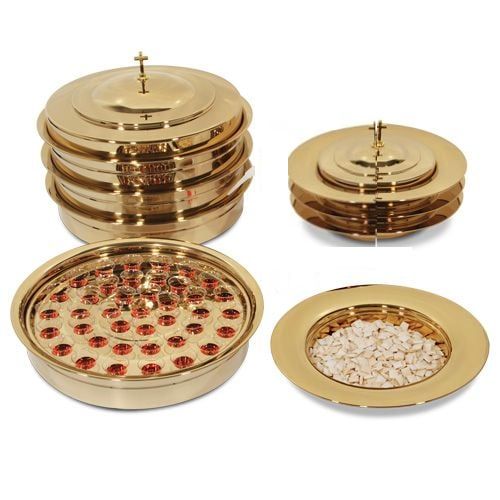
Jesus commanded, “Do this in remembrance of Me.” And it was for each emblem, both the bread and the cup.
These passages are a direct call to imitate Jesus’ actions and attitude during communion. The bread represents His body, and the cup represents His blood. Two items. Two commands.
Why did Jesus pray before each emblem? Was it not because the emblems1 teach and reminds us of two separate actions of Jesus' sacrifice for us?
• The Bread symbolizes Christ’s body, broken for us. A prayer of thanks acknowledges His sacrifice and suffering.
• The Cup represents His blood, shed for the forgiveness of sins. Giving thanks honors the new covenant and the cleansing it brings.
🕊️ Early Church Practice: Jesus predicted, “as oft as you do it.”
• Acts 2:42 – “They devoted themselves to the apostles’ teaching and to fellowship, to the breaking of bread and to prayer.”
• Acts 20:7 – Describes believers gathering on the first day of the week to break bread.
🔍 Symbolic and Spiritual Meaning
• John 6:53–58 – Jesus speaks metaphorically of two things: (1) eating His flesh and (2) drinking His blood, pointing to our spiritual communion with Jesus: “Whoever feeds on my flesh and drinks my blood has eternal life.”
Note: The Mosaic Passover for the Jews included prayer for each item of worship as indicated in the Hebrew Seder. Jesus follows this practice in separately establishing prayer for each item of the Passover.
1 emblem: “a device, symbol, or figure adopted and used as an identifying mark ” Webster Dictionary online